CCW Guides
Where You Can & Can't Carry in California
A CCW license is not a carry-anywhere pass. SB 2 rewrote the map, here's where it stands in 2026.
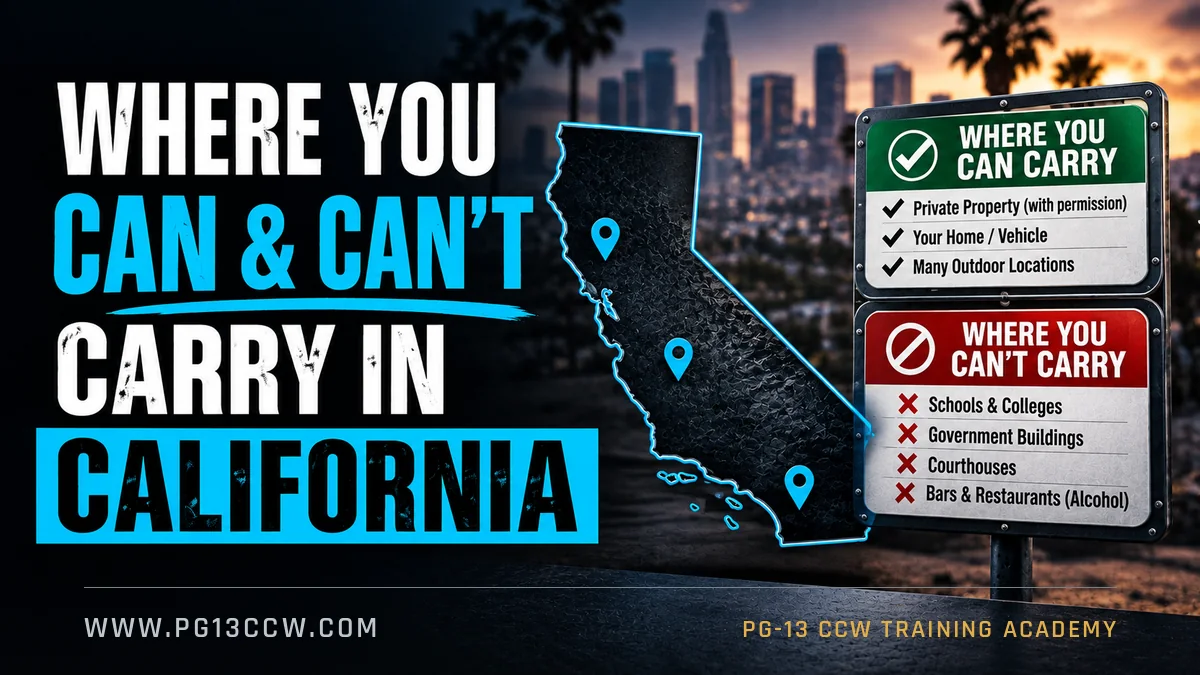
A CCW license is not a carry-anywhere pass. SB 2 rewrote the map, here's where it stands in 2026.
Since SB 2 took effect, California defines a long list of "sensitive places" where even licensed CCW holders may not carry. Parts of the law have been in federal litigation since day one, so this is an area where staying current matters as much as the license itself.
Your license authorizes concealed carry in public places that are not restricted by statute, federal law, or valid signage. The burden of knowing the map is on you — "I didn't know" is not a defense, and violations can cost you the license and worse.
Categories currently enforced include (not exhaustive):
SB 2 also flipped the default for many private businesses — where signage rules apply, a posted prohibition controls. Practical habit: look for signage at every unfamiliar entrance, and when a location is ambiguous, treat it as restricted until you've verified.
Which sensitive-place categories are enforceable has shifted repeatedly through the May v. Bonta line of cases, with review pending at the U.S. Supreme Court as of 2026. Court orders change the enforceable list — sometimes overnight. Before relying on any single category being on or off the list, verify the current status with your issuing county or counsel.
This is exactly why California requires 16 hours of training rather than a form and a fee: knowing when force is legally justified and where carry is lawful is the real skill. If you're still working toward the license, start with the full process guide and confirm you meet the current requirements.
This guide is general information for California CCW applicants, not legal advice. Laws and county procedures change — confirm current requirements with your issuing authority or an attorney.