CCW Guides
Initial vs Renewal: California's Two CCW Courses
California requires two different courses depending on where you are in the process. Here's what each covers and which one you need.
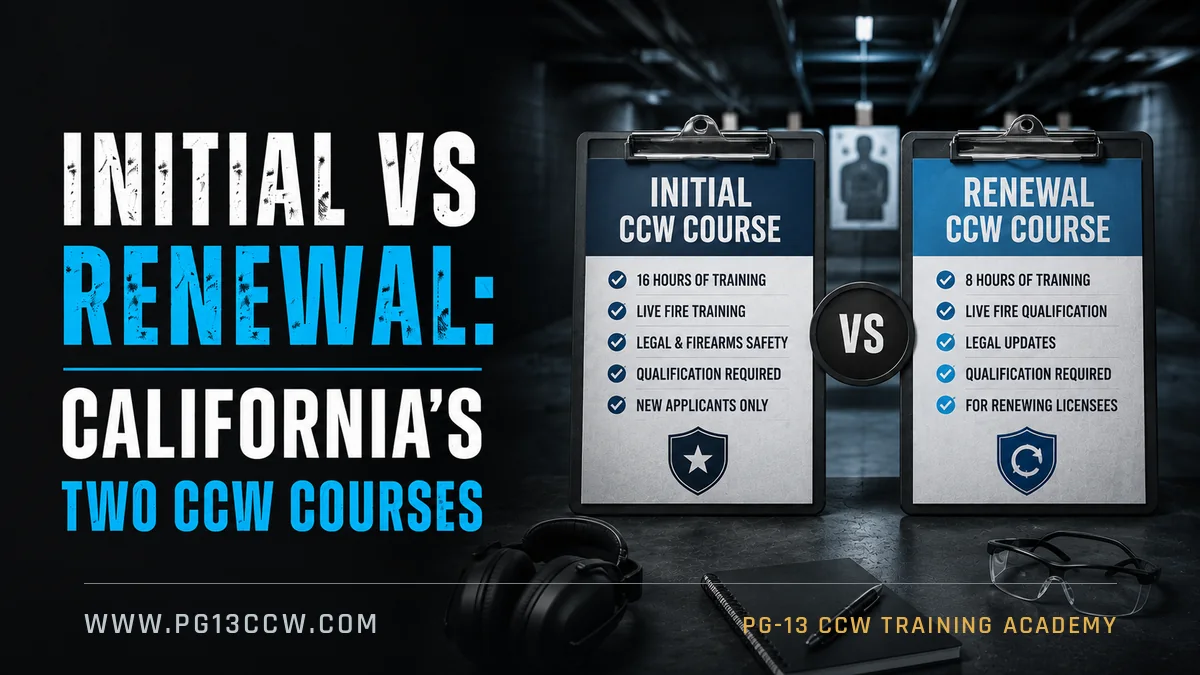
California requires two different courses depending on where you are in the process. Here's what each covers and which one you need.
Since SB 2 took effect, California sets minimum hours for CCW training statewide: 16 hours for a first license, 8 hours for each renewal. They are different courses with different depth — and counties will reject a certificate from the wrong one.
If your license already expired, most counties treat you as a new applicant — another reason to handle renewal early.
The state mandates coverage of firearm safety and handling, safe storage and transport, legal standards for the use of deadly force, mental health and de-escalation, and county-specific law. At PG-13 CCW, that maps to our eight-module curriculum — from firearm operation through California use-of-force law and self-defense decision-making — capped by live-fire qualification. First time holding a firearm? Read what to expect at your first class — no prior experience is required.
The renewal course assumes competence and focuses on what changed: updates to carry law (and there have been many since SB 2), skills refreshers, and re-qualification with each handgun on your permit. It's one day, not two.
Both courses end at the range. You must demonstrate safe handling and shooting proficiency with every handgun you intend to list on your license. Standards are set by the issuing agency; our instructors run you through the actual course of fire your county uses, so qualification day holds no surprises.
Check classes & pricing for both formats, or jump straight to booking. Unsure whether your situation counts as initial or renewal? Call us at 747-CCW-2000 before you book — it takes two minutes to confirm.
This guide is general information for California CCW applicants, not legal advice. Laws and county procedures change — confirm current requirements with your issuing authority or an attorney.